
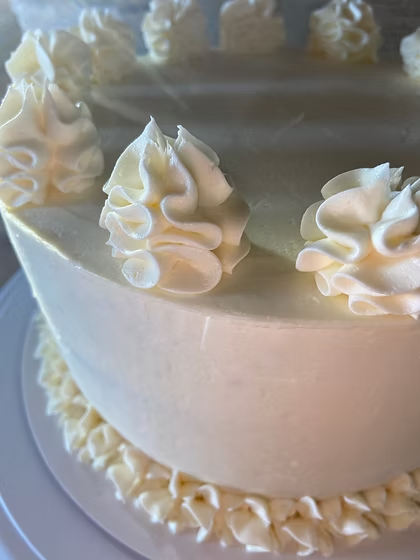
One of the first questions couples ask when planning a wedding cake is simple: how much cake do we actually need? Order too little and some guests miss out; order too much and you pay for cake that goes home in boxes. The answer depends on your guest count, the size of each slice and whether other desserts are on the table. This guide explains standard wedding cake servings, gives you a tier-by-tier chart and shares practical tips for choosing the right cake size.
Wedding servings vs. party servings
Cake servings are not one fixed size. Bakers usually work with two standard portions:
- Wedding servings are about 1 inch wide, 2 inches deep and 4 inches tall. They are slim slices, traditionally served after a full meal.
- Party servings are larger, about 1.5 inches wide, 2 inches deep and 4 inches tall, which is what most people expect at a birthday.
Because wedding slices are smaller, the same cake gives more wedding servings than party servings. When you compare quotes from different bakers, check which serving size each one uses.
How many servings does each tier give?
For round tiers about 4 inches tall, these industry-standard figures are a useful starting point. They are approximate wedding servings; your baker will confirm the exact numbers for your design.
| Round tier size | Approximate wedding servings |
|---|---|
| 6 inch | 12 |
| 8 inch | 24 |
| 10 inch | 38 |
| 12 inch | 56 |
| 14 inch | 78 |
Add the tiers together to estimate a whole cake. For example:
- Two tiers, 6 inch and 8 inch: about 36 servings, ideal for small weddings and elopement parties.
- Three tiers, 6, 8 and 10 inch: about 74 servings.
- Three tiers, 8, 10 and 12 inch: about 118 servings.
Square tiers give more servings than round tiers of the same size, while taller or extended tiers can change the numbers again, so always confirm with your baker.
Should you order for every guest?
Many couples order enough cake for their full guest count, so nobody misses out. Others order a little less, for a few reasons:
- Some guests leave before the cake is cut or skip dessert.
- If you also have a dessert table, cupcakes or favors, fewer people take a full slice.
- Very young children often share or eat only a little.
If you are serving the cake as the only dessert after dinner, plan for your full guest count. If there are other sweets, ordering for around 80 to 90 percent of guests is a common compromise. If you plan to save the top tier, remember that those servings will not be available on the day.
Display cake plus kitchen cake
For large weddings, some couples order a smaller display cake for the cutting ceremony and photos, and a plain cake in the same flavor that stays in the kitchen to be sliced and served. It is a practical way to get the look of a smaller, more detailed cake while still feeding everyone. Ask your baker whether this option is available for your date.
Choosing the number of tiers
Servings are not the only reason to add tiers. Height gives a cake presence in a large room, and more tiers mean more surfaces to decorate. On the other hand, a beautifully decorated two-tier cake suits a smaller venue or a relaxed celebration. Here is a rough guide:
- Up to about 40 guests: a two-tier cake usually works well.
- About 50 to 100 guests: three tiers are typical.
- More than 100 guests: four tiers, larger tier sizes, or a display cake with kitchen cake.
How wedding cakes are priced
Wedding cakes are commonly priced per serving, with the rate depending on the level of decoration involved. At Another Slice of Cake, custom wedding cakes are priced per serving according to the decoration, and delivery is calculated by location. For smaller celebrations, our two-tier custom cakes start at $180, depending on the intricacy of the decorations and the choice of fondant or buttercream. Current details are always on the wedding cakes page.
Flavors and finishes for wedding cakes
Different tiers can have different flavors, which is a nice way to please a range of tastes. Many couples choose one crowd-pleasing classic, such as vanilla, for the largest tier and something more adventurous, such as lemon or red velvet, for a smaller one. For the finish, buttercream gives a soft, natural look that pairs well with fresh flowers, while fondant gives a smooth, formal surface for detailed designs. Our article on buttercream vs. fondant explains the trade-offs, including how each holds up at outdoor summer weddings.
Delivery and setup
A tiered cake is heavy and delicate, so delivery is usually the safest option. Confirm with your venue where the cake will be displayed, that the table is sturdy and level, and that the spot is away from direct sunlight, heaters and busy walkways. Share the venue contact details with your baker and agree on a delivery time that leaves room for setup before guests arrive.
Cutting and serving on the day
Getting the planned number of servings out of a cake depends on how it is cut. Make sure the person serving the cake, whether venue staff or a friend, knows the portion size you planned for. A long, sharp knife dipped in hot water and wiped between cuts gives clean slices. Tiered cakes are cut one tier at a time: the top tier is lifted off first, along with its board, and the supports are removed from each tier before slicing. Round tiers are easiest to portion by cutting a circle about 2 inches in from the edge, slicing that ring into 1-inch pieces, then repeating with the next ring. Ask your baker for a cutting guide if you are unsure.
Quick checklist for your wedding cake order
- Confirm your final guest count and decide on the number of servings.
- Choose the number of tiers and the overall style.
- Pick flavors and fillings for each tier.
- Decide on a buttercream or fondant finish.
- Arrange delivery, setup and who will cut and serve the cake.
- Collect inspiration photos, your color palette and any flower details.
Plan your wedding cake with confidence
With a serving chart and a clear guest count, choosing the right cake size becomes a simple calculation. If you are planning a wedding in or around Frederick, Maryland, take a look at our wedding cakes and custom cakes, and read what goes into a handmade custom cake to see how your cake will come together.
Comments