
A custom cake looks effortless when it arrives at a party: smooth sides, neat layers and decorations that match the theme perfectly. Behind that finished cake are many hours of planning, baking, chilling and decorating, much of it spread over several days. In this post we take you up close to the craft and walk through what goes into a handmade custom cake, from the first conversation to the moment it is boxed up for collection. Knowing the process also makes it easier to plan your own order.
It starts with a design brief
Every custom cake begins with questions. How many people will it serve? What is the occasion, the theme and the color palette? Which flavors and fillings do you love, and is there anything that must be avoided? Inspiration pictures are especially useful at this stage, because a photo can explain a style faster than any description. At Another Slice of Cake, custom cakes are designed based on your request, and sending inspiration pictures together with the details of your order, such as cake flavor, filling and number of servings, is the first step.
The answers decide the size and shape of the cake, how many tiers it needs, whether it will be finished in buttercream or fondant and how much decoration is involved. They also determine the price, which is why custom cake prices vary with size, design and decoration.
Planning the timeline
A cake that looks like one piece is really a sequence of steps that cannot all happen on the same day. Layers need to cool completely before they can be filled. Buttercream needs time in the refrigerator to firm up between coats. Fondant decorations and sugar flowers may need a day or more to dry so they keep their shape. A baker works backwards from the collection date to schedule each stage, which is one reason custom cakes are best ordered well in advance.
Baking the layers
The cake layers are usually baked a day or two before decorating. Each layer is weighed or measured into the pan so the tiers bake evenly and stack level. Once baked, the layers cool completely, and are often wrapped and chilled, which makes them firmer and easier to handle. A cold cake layer crumbles less when it is trimmed and stacked.
Flavor choices come into play here: a vanilla, chocolate, lemon, red velvet or fruit-based sponge, each with its own recipe and baking time. Good ingredients matter, too. Another Slice of Cake bakes with homegrown or locally sourced fresh produce wherever it can, which shows in fillings made with fresh fruit.
Leveling, filling and stacking
Most cakes bake with a slight dome. A serrated knife or cake leveler removes the dome so each layer sits flat. Thicker layers may also be split in half horizontally, a technique called torting, to create more layers of filling.
The layers are then stacked on a cake board with filling between each one. A stiff ring of buttercream piped around the edge of each layer, called a dam, keeps softer fillings such as fruit, curd or caramel from leaking out the sides. Our six-inch cakes, for example, are made with three layers of cake, filled and covered in buttercream.
The crumb coat
Before the final finish goes on, the cake gets a thin layer of buttercream over the top and sides. This crumb coat traps loose crumbs and fills any gaps between layers. The cake then goes into the refrigerator until the coat is firm. Skipping this step is the main reason home-decorated cakes end up with crumbs in the frosting.
The final finish: buttercream or fondant
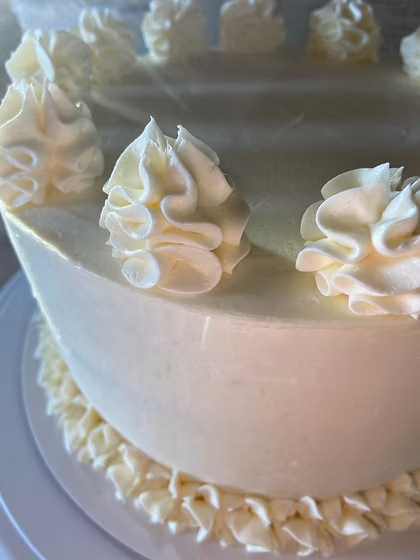
For a buttercream finish, a generous final coat is applied and smoothed with a bench scraper while the cake turns on a turntable. Sharp top edges are created by pulling the excess frosting in toward the center with an offset spatula. Getting a truly smooth finish can mean several rounds of scraping and chilling.
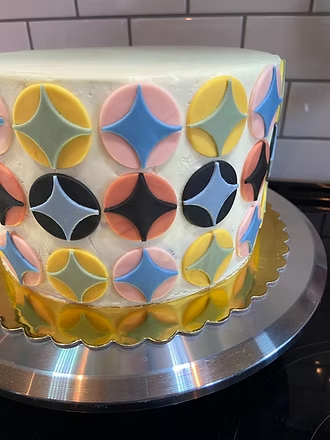
For a fondant finish, the chilled, buttercream-coated cake is covered with a thin sheet of rolled fondant, smoothed by hand and with smoothing tools, and trimmed at the base. Fondant gives a clean, flawless surface that is ideal for geometric designs, painted details and cut-out shapes. If you are deciding between the two, our guide to buttercream vs. fondant compares them in detail.
Decorating
This is the part everyone sees, and it is often the most time-consuming. Depending on the design, decorating might include:
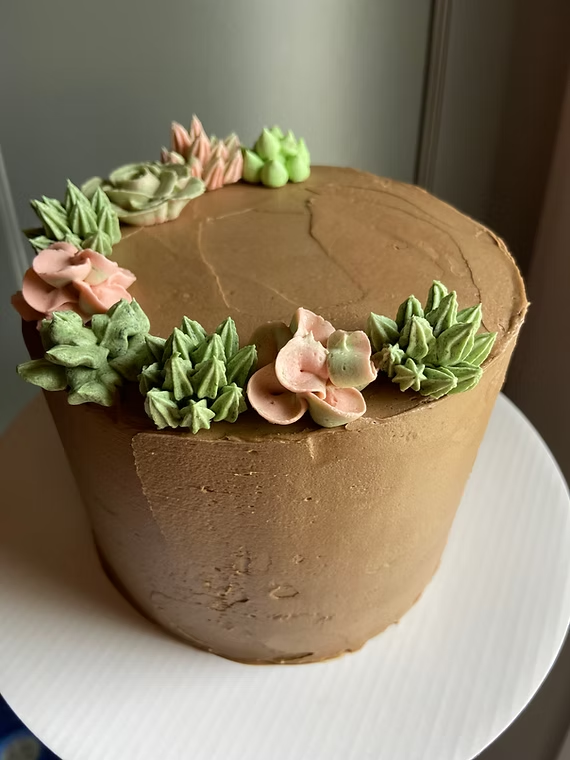
- Piped buttercream flowers, rosettes and swirls
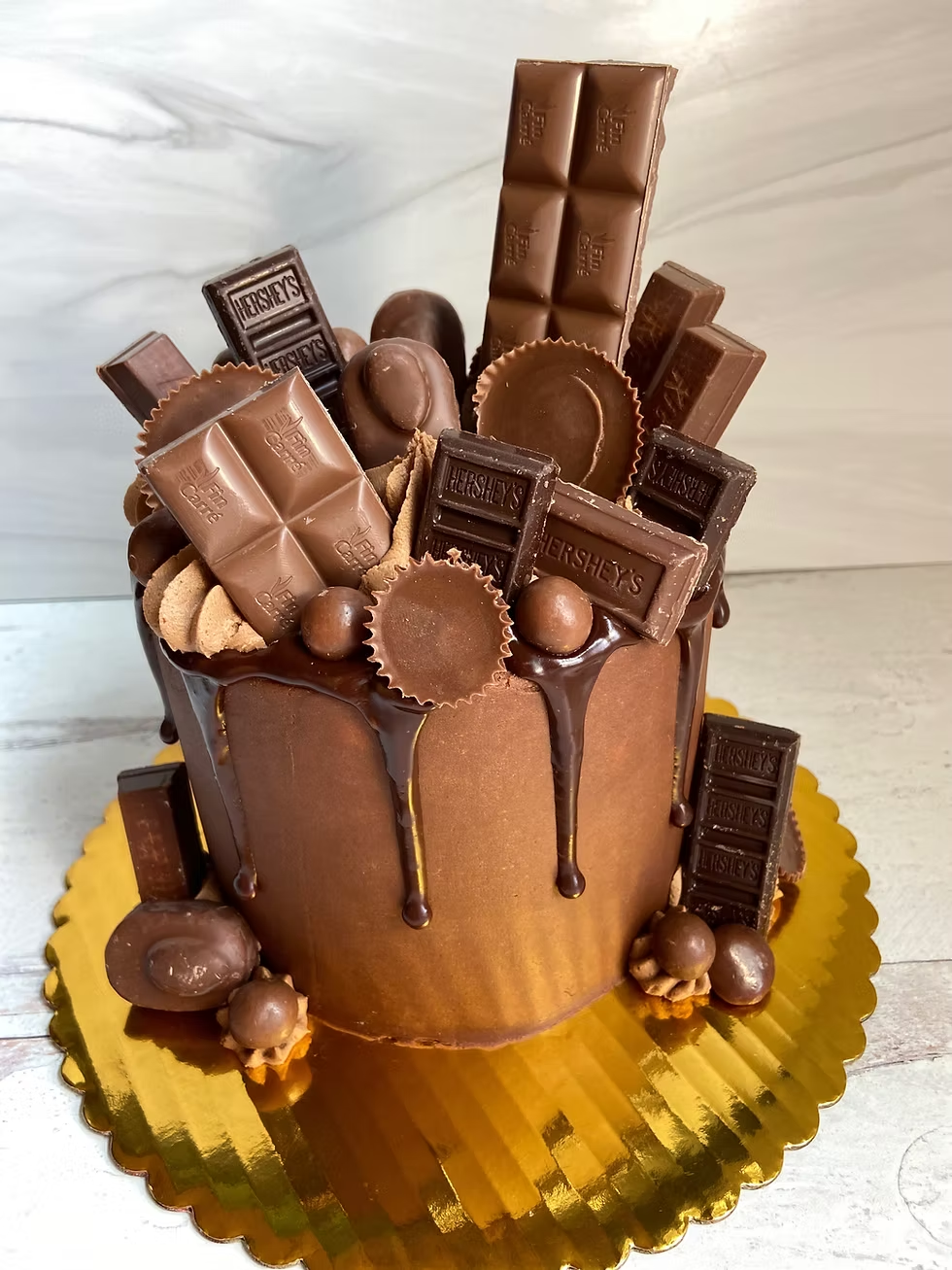
- A chocolate ganache drip around the top edge
- Hand-cut fondant toppers, letters and shapes
- Fresh fruit, truffles, sprinkles or candy
- Hand-lettered messages
Detailed pieces such as fondant figures or sugar flowers are usually made ahead so they have time to set before they are placed on the cake.
Supporting tiered cakes
A tiered cake needs hidden structure. Each tier sits on its own cake board, and dowels or straws inserted into the tier below carry the weight, so the bottom tier is not crushed. Taller cakes may also have a central dowel running through the tiers for stability during transport. This internal engineering is invisible on the day, but it is what keeps a two- or three-tier cake standing straight.
Final checks and boxing
Before collection, the cake is checked from every angle, any marks are touched up, and it is chilled so it is firm for travel. It is boxed on a sturdy board, ready to go. Our guide on how to store and transport a cake explains how to get it home safely.
What this means when you order
Understanding the process explains a few things about ordering a custom cake:
- Lead time matters. Multi-day schedules fill up, especially around holidays and wedding season.
- Details help. The more information you share at the start, the fewer surprises there are later.
- Deposits secure your date. At Another Slice of Cake, a 40% non-refundable deposit is required once a custom cake order is placed.
- Complexity affects price. Extra tiers, fondant work and intricate decorations all add hours.
Ready to plan your cake?
A handmade cake is a small project of its own, and the best results come from good planning on both sides. If you are ready to start, read our step-by-step guide to ordering a custom birthday cake, then visit the custom cakes page or look at two-tier custom cakes for larger celebrations, made in historic downtown Frederick, Maryland.
Comments