
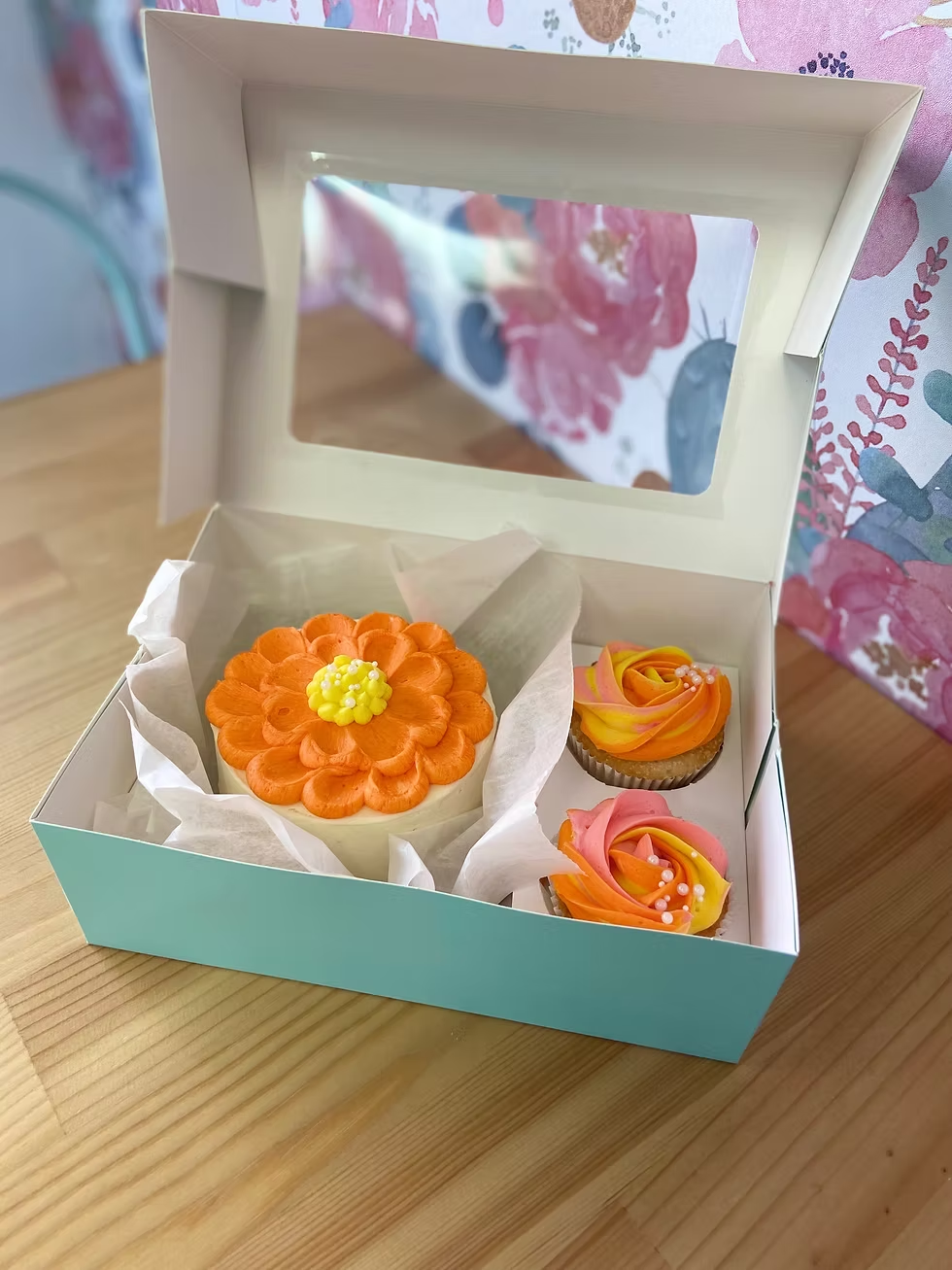
You have chosen the perfect cake. Now it has to get from the bakery to the party in one piece, stay fresh until it is served and be cut into neat slices. Cakes are more delicate than they look, and heat, sudden stops and sloping car seats are their biggest enemies. These practical tips will help you transport, store and serve a celebration cake safely, whether it is a 6-inch birthday cake or a tiered wedding cake.
Before you collect the cake
- Clear a flat space in the car. The floor of the passenger side or a flat, empty trunk area of an SUV is better than a seat, because most car seats slope backwards.
- Cool the car first. Run the air conditioning before you load the cake, especially in summer.
- Bring a non-slip mat. A rubber shelf liner or yoga mat under the box stops it sliding.
- Plan your route. Go straight to the venue, avoid stops on the way and allow extra time so you are not rushing.
- Bring a helper. For larger cakes, one person drives while another keeps an eye on the box.
Transporting the cake
Keep the cake in its box and hold it level from both sides at the bottom, never by the top or the edges of the box. Place it flat on the non-slip surface and make sure nothing can fall onto it. Drive smoothly, take corners slowly and brake gently. Cakes are most likely to be damaged by a sudden stop.
Keep the cake out of direct sunlight, which can warm one side of a box quickly even when the car feels cool. Never leave a cake in a parked car, even for a few minutes on a warm day. Buttercream softens quickly in heat and decorations can slide.
Tiered cakes
Tiered cakes are heavy and have a high center of gravity. They are best delivered by the baker or transported in separate tiers and assembled at the venue. If you are collecting one yourself, ask your baker for specific advice on how it is supported and how it should travel.
Storing a cake before the party
How you store a cake depends on what it is made of and how long it needs to wait.
- Buttercream cakes can usually sit in a cool room, away from sunlight and heat, for a few hours. In warm weather, or if the party is the next day, keep the cake in the refrigerator and take it out one to two hours before serving so the cake and frosting soften and the flavor comes through.
- Cakes with perishable fillings, such as fresh cream, cream cheese frosting, custard or fresh fruit, should be kept refrigerated. Food safety guidance is to avoid leaving perishable foods at room temperature for more than two hours.
- Fondant-covered cakes are best kept in a cool, dry place. If they need refrigerating, leave them in the box so condensation does not form directly on the surface, and let any moisture evaporate before touching it.
- Chocolate ganache can sweat if it goes from cold to warm quickly, so let it come to room temperature gradually inside the box.
Keep cakes away from strongly flavored foods in the refrigerator, since butter-based frostings absorb odors easily. If you are unsure, ask your baker how your particular cake should be stored.
Displaying the cake at the party
Choose a sturdy, level table away from windows, heaters, candles and busy walkways. Outdoors, keep the cake in the shade and bring it out as close to serving time as you can. If there are pets or small children around, a spot slightly out of reach saves a lot of worry.
Outdoor and summer events
Summer parties and outdoor celebrations need a little extra planning. Ask your baker which finish and filling will hold up best in the heat, and avoid fresh cream or soft cream cheese fillings for long outdoor events. Keep the cake refrigerated or in the coolest room available until shortly before it is needed, set up the cake table in full shade and away from grills or patio heaters, and have a cake cover or dome ready to keep insects off. Plan to cut and serve the cake soon after it comes out rather than leaving it on display for hours.
Cutting neat slices
A few simple techniques make a big difference to how slices look on the plate:
- Use a long, sharp knife. Dip it in hot water and wipe it dry before each cut for clean edges.
- Cut chilled cake, serve at room temperature. A slightly firm cake cuts more neatly; let slices sit for a few minutes before eating.
- Cut round cakes in rings for bigger crowds. Cut a circle about 2 inches in from the edge, slice that outer ring into portions, then repeat with the next ring. This gives more even slices than cutting wedges from the center.
- Remove supports. On tiered cakes, lift off each tier with its board and take out any dowels or straws before slicing.
Storing cupcakes
Cupcakes travel best in a box with inserts that hold each one in place. Keep them in a cool spot and out of the sun. Buttercream-topped cupcakes are fine at cool room temperature for the day; refrigerate any with cream cheese frosting or fresh fruit, and let them warm up a little before serving.
Leftovers
Press plastic wrap or parchment against any cut surface to stop the sponge drying out, then store the cake in an airtight container or cake box. Refrigerated leftovers are generally best within three to four days. Cake also freezes well: wrap individual slices tightly in plastic wrap, then foil, and freeze for up to two to three months. Thaw slices in the refrigerator, still wrapped, then bring them to room temperature.
Quick summary
- Flat surface, cool car, non-slip mat, gentle driving.
- Never leave a cake in a hot or parked car.
- Refrigerate perishable fillings; serve buttercream cakes at room temperature.
- Display in a cool, shaded, stable spot.
- Hot, clean knife for neat slices.
Enjoy every slice
With a little preparation, getting your cake to the party safely is easy. If you are ordering a cake for an upcoming celebration, read our step-by-step guide to ordering a custom birthday cake and our wedding cake serving guide, then browse the Another Slice of Cake shop or our custom cakes.
Comments