
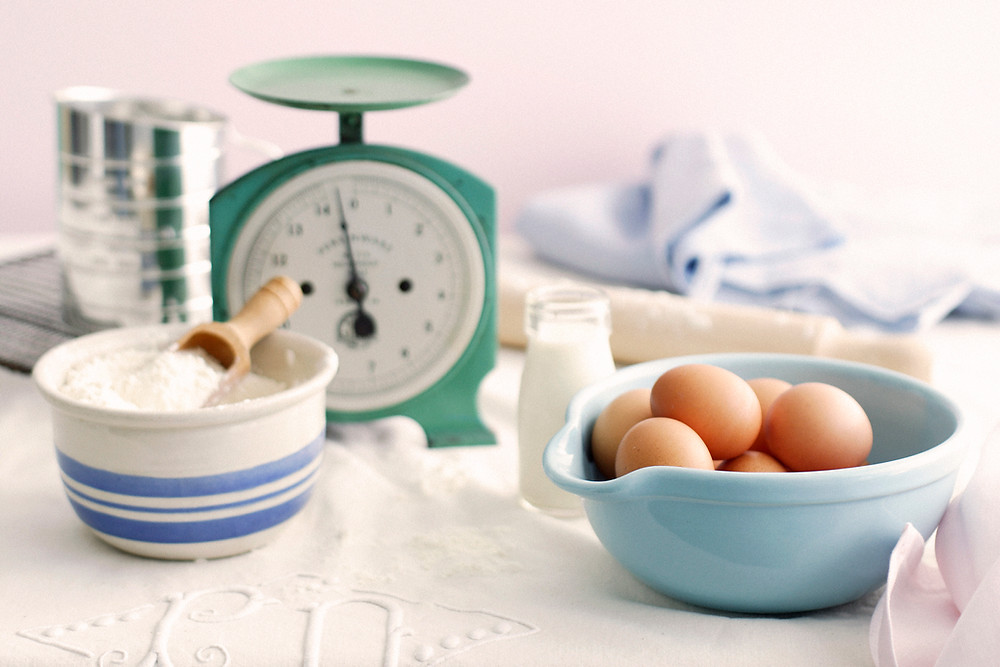
A great cookie looks simple: golden edges, a soft and slightly chewy middle, and pockets of melted chocolate. Getting there every single time is a little less simple. Small details such as the temperature of your butter, how you measure flour and whether you chill the dough make a big difference to the finished cookie. This guide walks you through the choices that matter, gives you a dependable chocolate chip cookie formula, and explains how to fix the most common cookie problems.
Start with the right ingredients
Most drop cookies are built from the same short list of ingredients. Each one has a job, and understanding that job helps you adjust a recipe instead of guessing.
- Butter gives flavor and controls spread. Softened butter that still feels cool (around 65°F / 18°C) creams well and holds air. Butter that is warm or greasy makes cookies spread thin.
- Sugar does more than sweeten. White granulated sugar makes cookies crisper and helps them spread; brown sugar holds moisture, so more brown sugar means a chewier, softer cookie with a deeper caramel flavor.
- Flour provides structure. All-purpose flour works for nearly every cookie. Too much flour gives dry, cakey cookies; too little gives flat ones.
- Eggs bind the dough and add moisture. An extra yolk makes cookies richer and chewier.
- Baking soda helps cookies brown and spread. Check that it is fresh; old leavening gives pale, dense results.
- Salt and vanilla are small amounts with a big effect. Salt sharpens the chocolate and caramel notes, and pure vanilla rounds everything out.
Measure like a baker
The single most common reason cookies turn out differently from batch to batch is the way flour is measured. Scooping a measuring cup straight into the bag packs the flour down, and you can easily end up with 20 to 30 percent more than the recipe intended. A kitchen scale solves this completely. If you use cups, spoon the flour into the cup and level it with the back of a knife without pressing down.
Cream the butter and sugar, but don't overdo it
Beat the softened butter with both sugars for about two to three minutes on medium speed, until the mixture looks lighter in color and fluffy. This traps tiny air bubbles that help the cookies rise and set. Add the eggs one at a time, then the vanilla. Once the flour goes in, switch to low speed or a spatula and mix only until no dry streaks remain. Overmixing at this stage develops gluten and leads to tough cookies.
Why you should chill cookie dough
Chilling is the step most home bakers skip, and it is the one that most improves the final cookie. Resting the dough in the refrigerator for at least an hour, or ideally overnight, does three things:
- The butter firms up, so the cookies spread more slowly and stay thick.
- The flour absorbs moisture from the eggs, which gives a chewier texture.
- The flavors deepen, with more noticeable toffee and caramel notes.
Scoop the dough into balls before chilling and you can bake straight from the fridge. Well-wrapped dough balls also freeze for up to three months; bake them from frozen and add a minute or two to the bake time.
Shaping and baking
Use a cookie scoop or a tablespoon so every cookie is the same size and bakes evenly. Leave about two inches between them on a sheet lined with parchment paper. Light-colored aluminum sheets bake more evenly than dark ones, which can scorch the bottoms.
Always preheat the oven fully, and bake one sheet at a time on the middle rack if you can. Pull the cookies out when the edges are golden and the centers still look slightly underdone. They keep cooking on the hot tray, so leave them there for about five minutes before moving them to a wire rack. Waiting until the middles look fully baked in the oven is the quickest route to a dry cookie.
A dependable chocolate chip cookie formula
This classic formula makes about 36 medium cookies and is a good base for experimenting.
Ingredients
- 2 1/4 cups (280 g) all-purpose flour
- 1 teaspoon baking soda
- 1 teaspoon fine salt
- 1 cup (226 g) unsalted butter, softened but cool
- 3/4 cup (150 g) granulated sugar
- 3/4 cup (165 g) packed light brown sugar
- 2 large eggs, at room temperature
- 2 teaspoons pure vanilla extract
- 2 cups (340 g) semisweet chocolate chips or chopped chocolate
Method
- Whisk the flour, baking soda and salt together in a bowl.
- Cream the butter and both sugars for two to three minutes until light. Beat in the eggs one at a time, then the vanilla.
- Mix in the dry ingredients on low speed until just combined, then fold in the chocolate.
- Scoop the dough into balls and chill for at least one hour.
- Bake at 375°F (190°C) for 9 to 11 minutes, until the edges are golden and the centers look soft.
- Cool on the sheet for five minutes, then transfer to a wire rack.
For a chewier cookie, swap 1/4 cup of the granulated sugar for extra brown sugar. For a crisper one, do the opposite. A pinch of flaky sea salt on top of each warm cookie is a small finishing touch that makes the chocolate taste even richer.
Troubleshooting common cookie problems
- Cookies spread into thin puddles: the butter was too warm, the dough was not chilled, or there was too little flour. Chill the dough and check your measuring.
- Cookies are puffy and cakey: too much flour or too much egg. Weigh the flour and avoid overbeating after the eggs go in.
- Cookies are dry and crumbly: they were baked too long. Take them out while the centers still look soft.
- Bottoms are burnt: the sheet is dark, the oven runs hot, or the rack is too low. Use parchment, a light-colored sheet and an oven thermometer.
- Cookies taste flat: add the full amount of salt and use pure vanilla rather than imitation.
Storing cookies so they stay fresh
Keep cooled cookies in an airtight container at room temperature for up to four days. A slice of bread in the container helps soft cookies stay soft. Baked cookies also freeze well for up to three months; let them come back to room temperature or warm them for a few minutes in a low oven before serving.
Bake, practice and enjoy
The perfect cookie comes from good ingredients, careful measuring, a little patience while the dough chills, and taking the tray out a minute earlier than feels natural. Try the formula above, adjust it to your taste and keep notes on what you change.
When you would rather leave the baking to someone else, browse the Another Slice of Cake shop for freshly baked treats, or explore more ideas in our 10 easy-to-make dessert recipes. Planning a party? Our guide to choosing cupcakes or cake can help you decide what to serve.
Comments